

Morning Routine: Clean Your Mouth
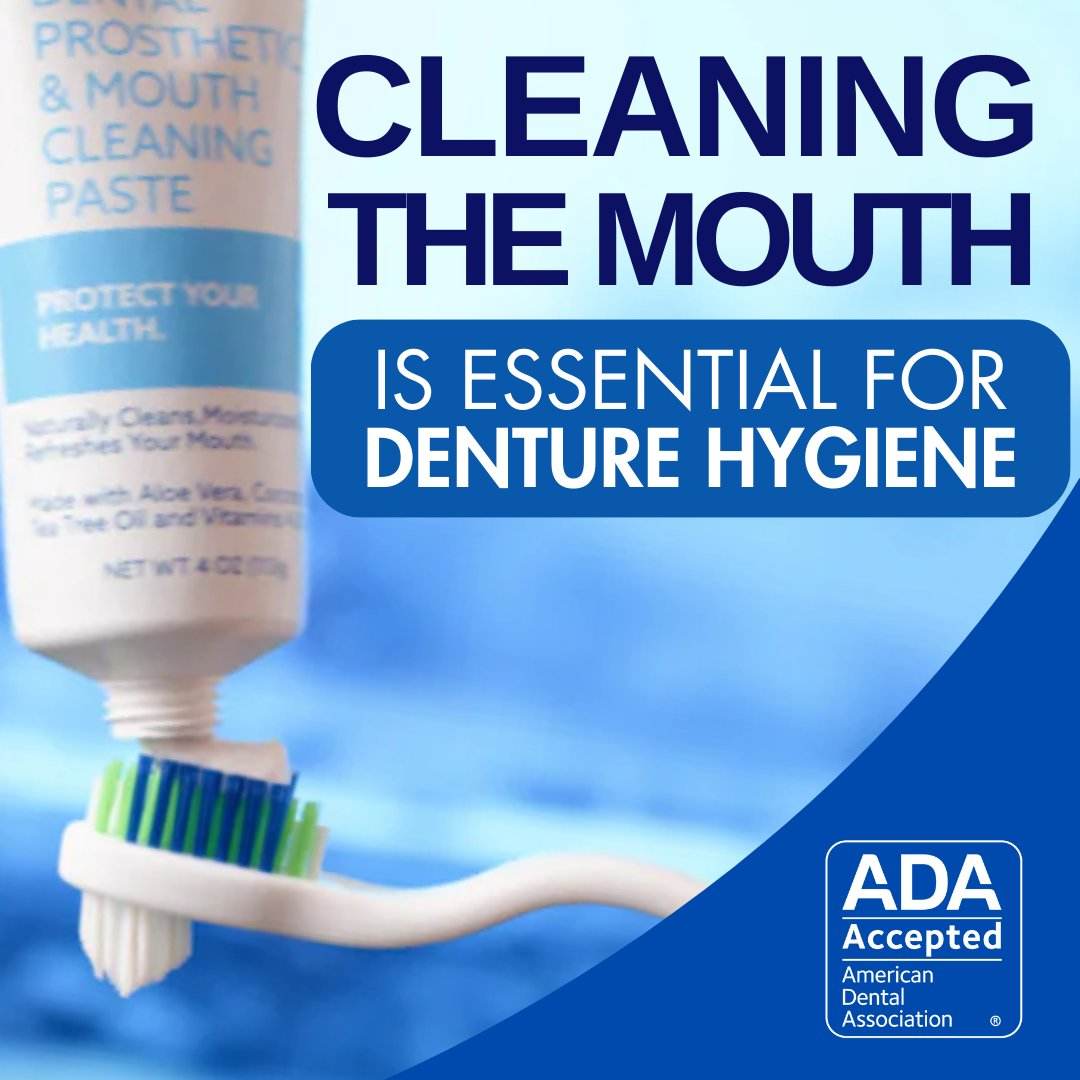
1. Brush Your Mouth (Yes — even if you have no teeth)
Use: Cleanadent Paste + Ergonomic Toothbrush to Clean:
Gums
Tongue
Cheeks
Roof of mouth
Implant abutments or housings (if applicable)
Eating changes because dentures:
Rest on gum tissue, not tooth roots
Cover areas your tongue normally uses for control
Can move slightly if adhesive is not used
Require balanced pressure on both sides
This is normal — and your mouth adapts quickly with the right approach.
Most people return to eating 90% of foods within 1–3 weeks when they follow a proper routine.
Recommended foods:
Scrambled eggs
Mashed potatoes
Fish
Yogurt
Pasta
Soups
Oatmeal
Cooked vegetables
Soft fruits
Rice dishes
Smoothies
Avoid during the first week:
❌ Tough meats
❌ Sticky candies
❌ Hard bread crusts
❌ Raw carrots or apples
❌ Nuts
❌ Popcorn
❌ Chewing gum
Use: Adhesadent (ADA Accepted)
Provides stability while chewing
Reduces gum irritation
Adds a smooth cushioning layer
Helps prevent friction sores
Start with small dots or strips until you find your ideal amount.
Start with bites the size of a teaspoon.
Large bites create uneven pressure that can lift the denture.
Using both sides keeps the denture seated and stable.
Chewing on only one side can cause:
Lifting
Rocking
Soreness
Faster wear on soft liners
Think: Left, right, left, right.
Start with softer foods like bananas or cooked vegetables.
When biting:
Use your canine teeth (corner teeth)
Avoid biting with front teeth until you’re confident
For sandwiches, fold the food or cut into smaller pieces
This prevents the denture from lifting at the front.
Dry mouth makes eating harder and more uncomfortable.
Tips:
Sip water during meals
Use Adhesadent (moisturizing ingredients help)
Avoid mouthwashes with alcohol
Use Cleanadent Paste to keep tissues soothed
Use: Cleanadent Wipes
Why?
Remove food debris
Reduce irritation
Prevent infection
Refresh your mouth on the go
Avoid sticky residue that affects comfort
Once you’re confident with soft foods, introduce:
Tender meats cut into small pieces
Steamed vegetables
Sliced fruits
Soft breads & tortillas
Pizza (small bites, softer crust)
Burgers (cut into quarters)
Most restaurant meals (with modifications)
Dentures limit certain foods — but with modifications, many are doable.
Steak → choose tender cuts, cut small
Apples → slice thin
Corn on the cob → cut kernels off
Nuts → swap for nut butters
Popcorn → choose puffed corn snacks
Very sticky caramel
Hard chewing candies
Ice cubes
Anything that stresses front teeth
Cause: Biting with front teeth
Solution:
Use canines
Take smaller bites
Use Adhesadent
Check denture fit with your dentist
Solution:
Cleanadent Wipes after meals
Use slightly more Adhesadent
Soak denture nightly in Liquid Crystal
Brush gums morning + night
Cause: Tissue irritation
Solution:
Use Adhesadent for cushioning
Clean tissues with Cleanadent Paste
Give gums a break at night
If persistent, get an adjustment
Cause: Denture might need an adjustment or reline
Solution:
See your dentist
Continue daily cleaning routine
Practice chewing evenly on both sides
Avoid very tough foods until evaluated
Moisturizing, comfortable hold for eating with confidence.
➡ Shop Adhesadent
Perfect for restaurants, social events, or long travel days.
➡ Shop Adhesadent Travel
Clean your denture and mouth anywhere after meals.
➡ Shop Cleanadent Wipes
Keeps your mouth healthy, balanced, and comfortable.
➡ Shop Cleanadent Paste
Brush gums, tongue, and cheeks to reduce irritation.
➡ Shop Toothbrush
Complete system for eating, speaking, and adjusting comfortably.
➡ Shop Starter Kit
Purpose: Promote healthy gums, remove biofilm and prevent oral infections like thrush.
No. Regular toothpaste is too abrasive and can scratch dentures. Use a non-abrasive cleanser like Cleanadent Paste instead.
Yes. Cleaning your gums, tongue, and cheeks removes bacteria and helps prevent irritation, infection, and denture stomatitis.
Liquid Crystal is recommended for home use because it cleans deeply without harsh chemicals. Powder Crystal packets are ideal for travel.
Dentists recommend soaking dentures every night to remove bacteria, stains, and odor that brushing alone cannot remove.
I've been a denturewearer for about 4 years now and Dr B's products are absolutely the perform as they're supposed to. They're approved by the Ada and they make wearing dentures something that you can do with confidence more than any other product.
Best denture and bacteria cleanser hands down.
My package was stuck in shipping for awhile so I reached out to the company for assistance. They were extremely fast at responding and even sent a new package immediately after seeing the package had not moved in about two weeks. Love the products and customer service!
Love it frist adhesive that works wher u can finally eat without ur teeth coming loose 😉
I got my starter kit and love all the products. My favorite is the sonic clean with the liquid crystals. Knowing that using the liquid crystals killing all the many kinds of bacteria eases my mind in this denture journey. Thank you Dr B !


