

Morning Routine: Clean Your Mouth
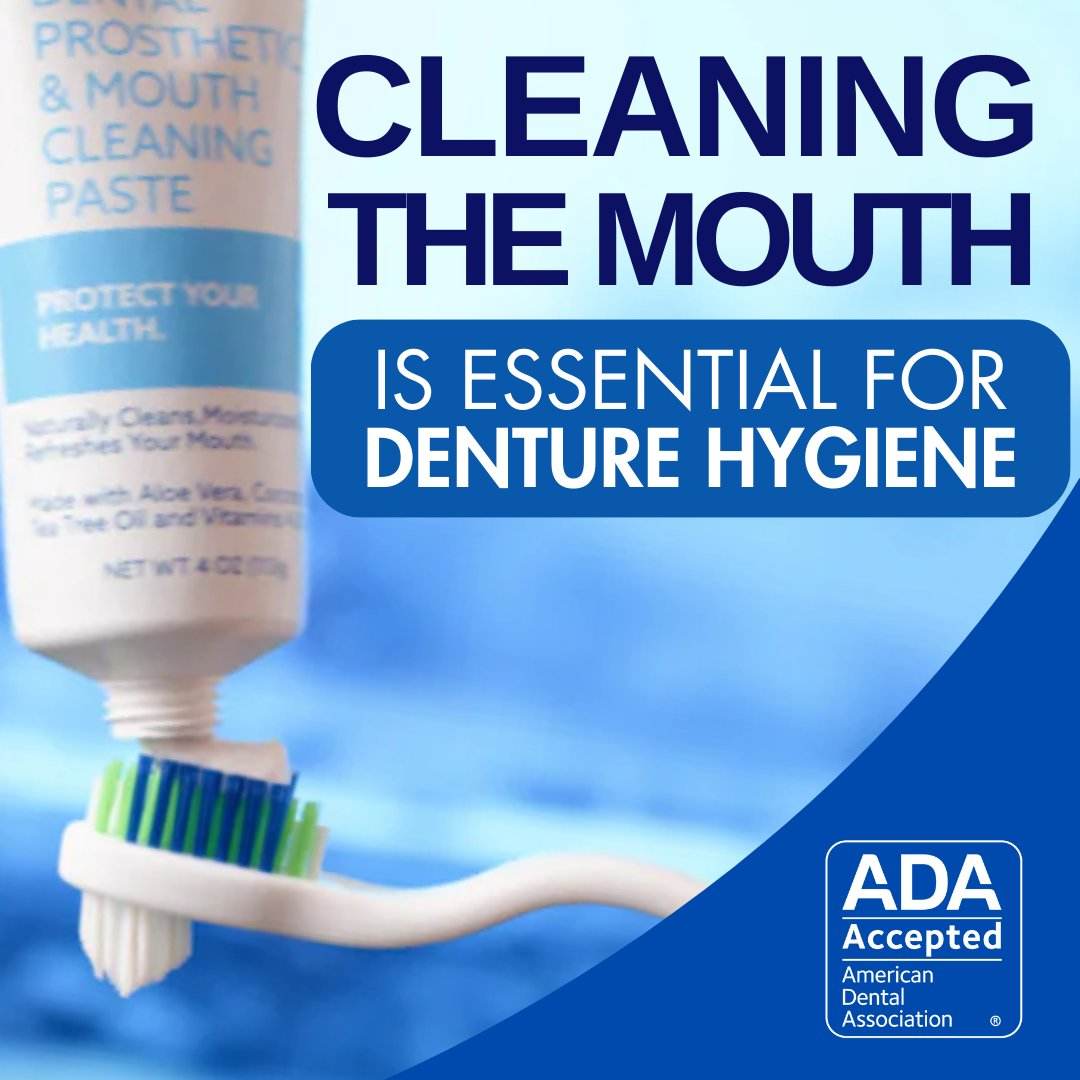
1. Brush Your Mouth (Yes — even if you have no teeth)
Use: Cleanadent Paste + Ergonomic Toothbrush to Clean:
Gums
Tongue
Cheeks
Roof of mouth
Implant abutments or housings (if applicable)
Denture infections and irritation usually develop when bacteria or yeast collect on your denture or in your mouth. The most common causes include:
Not cleaning your mouth daily
Using toothpaste on dentures (too abrasive)
Sleeping with dentures
Not soaking dentures overnight
Food and plaque trapped under the denture
Poor-fitting or old dentures
Dry mouth
Harsh chemical cleansers
Not cleaning implant abutments or soft liners correctly
The good news:
Most soreness, irritation, and infections are preventable with the right routine and products.
This is the doctor-designed protocol.
Use: Cleanadent Paste + Ergonomic Toothbrush
Even if you have no teeth, your mouth must be cleaned:
Brush:
Gums
Tongue
Cheeks
Roof of mouth
Implant attachments or housings
This removes bacteria, prevents yeast infections (denture stomatitis), and reduces irritation.
Use: Cleanadent Paste (Non-abrasive)
Avoid toothpaste — it scratches dentures, allowing bacteria to grow and stick to microabrasions.
Gently clean your denture and rinse thoroughly.
Use:
Nightly soaking:
Removes bacteria
Prevents infections
Dissolves odor-causing buildup
Reduces irritation
Extends denture lifespan
Never sleep with dentures in — this increases infection risk by 300%+ according to multiple clinical studies.
Use: Cleanadent Wipes
After meals or snacks, wipes help remove:
Food debris
Adhesive
Odor-causing bacteria
This prevents irritation that builds throughout the day.
Use: Adhesadent — ADA Accepted
Adhesadent creates a smooth cushioning layer that reduces friction and irritation.
Its moisturizing ingredients also help relieve dry mouth — a major cause of gum soreness.
Avoid zinc-based adhesive products if you’re sensitive.
Cleans BOTH your mouth and denture safely. ADA Accepted.
Deep-cleans without harsh chemicals.
Convenient travel-friendly packets that dissolve biofilm.
Perfect for removing debris and bacteria throughout the day.
Moisturizing formula prevents irritation while giving comfortable retention.
Dual-head brush for dentures and mouth tissues.
The complete system for daily hygiene and comfort.
Use red ❌ icons.
Scratches acrylic → traps bacteria → causes infection.
Highest risk factor for irritation & yeast infections.
Soft liners require gentle cleansers like Cleanadent Paste and Liquid Crystal.
Damages dentures & burns tissues.
Bacteria on gums transfer to dentures.
Causes inflammation, odor, and soreness.
Look for:
Redness
Bad breath
Sore spots
Burning sensation
White patches
Cracks at the corners of your mouth
Pain when wearing dentures
If symptoms persist, contact your dentist to rule out denture stomatitis.
Purpose: Promote healthy gums, remove biofilm and prevent oral infections like thrush.
No. Regular toothpaste is too abrasive and can scratch dentures. Use a non-abrasive cleanser like Cleanadent Paste instead.
Yes. Cleaning your gums, tongue, and cheeks removes bacteria and helps prevent irritation, infection, and denture stomatitis.
Liquid Crystal is recommended for home use because it cleans deeply without harsh chemicals. Powder Crystal packets are ideal for travel.
Dentists recommend soaking dentures every night to remove bacteria, stains, and odor that brushing alone cannot remove.
I've been a denturewearer for about 4 years now and Dr B's products are absolutely the perform as they're supposed to. They're approved by the Ada and they make wearing dentures something that you can do with confidence more than any other product.
Best denture and bacteria cleanser hands down.
My package was stuck in shipping for awhile so I reached out to the company for assistance. They were extremely fast at responding and even sent a new package immediately after seeing the package had not moved in about two weeks. Love the products and customer service!
Love it frist adhesive that works wher u can finally eat without ur teeth coming loose 😉
I got my starter kit and love all the products. My favorite is the sonic clean with the liquid crystals. Knowing that using the liquid crystals killing all the many kinds of bacteria eases my mind in this denture journey. Thank you Dr B !


