

Morning Routine: Clean Your Mouth
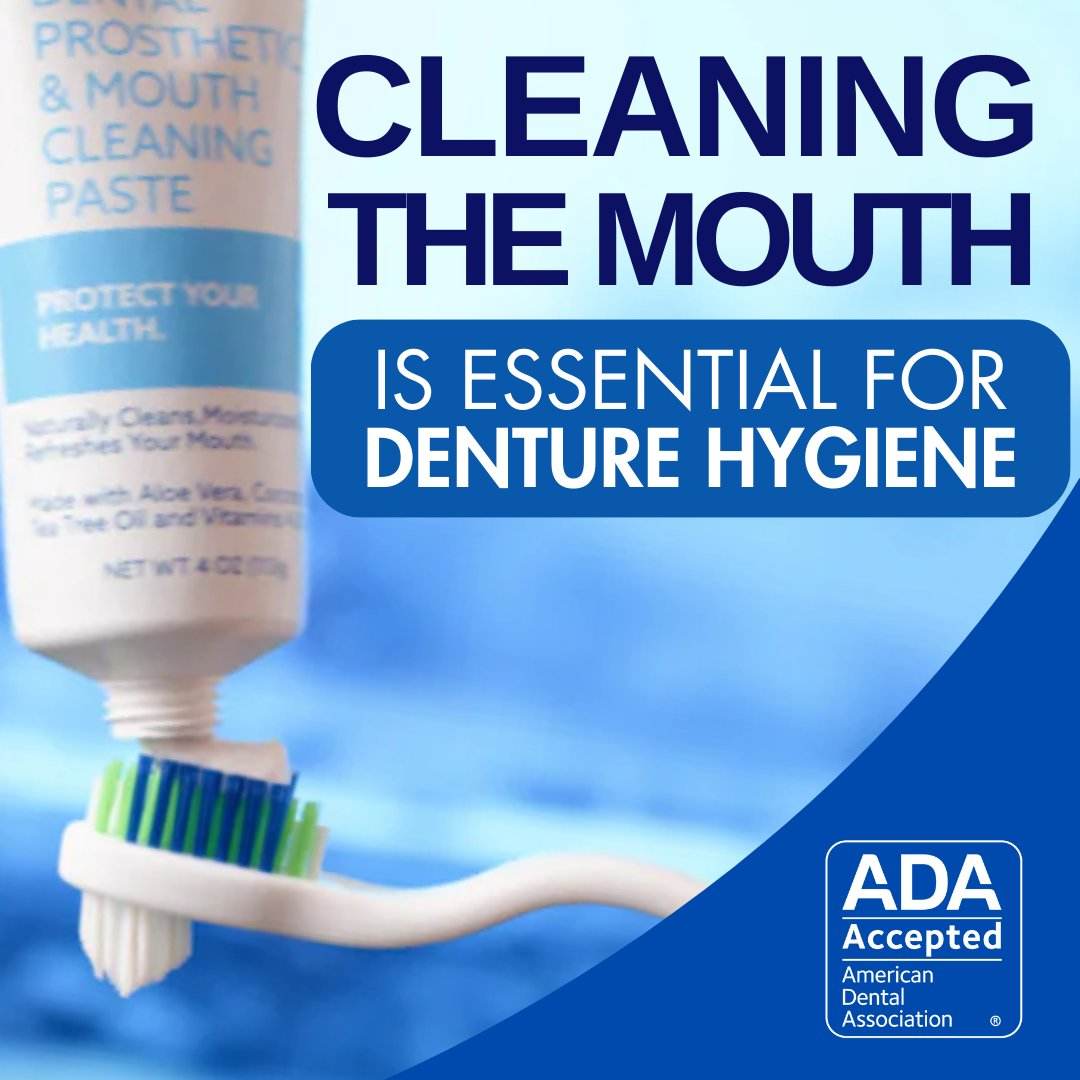
1. Brush Your Mouth (Yes — even if you have no teeth)
Use: Cleanadent Paste + Ergonomic Toothbrush to Clean:
Gums
Tongue
Cheeks
Roof of mouth
Implant abutments or housings (if applicable)
The adjustment period is normal
Most people need 2–4 weeks to get used to their new denture. During this time, it’s completely normal to experience:
A feeling of fullness in your mouth
Slight changes in speech
Extra saliva
Minor sore spots
Difficulty eating certain foods
These symptoms improve faster when you clean your mouth daily, manage irritation, and follow a consistent routine.
Clean your mouth (gums, tongue, cheeks) using Cleanadent Paste with the Ergonomic Toothbrush.
Clean your denture using Cleanadent Paste (non-abrasive).
Rinse and apply Adhesadent in small dots or strips.
Insert denture and hold in place for 10–20 seconds.
Avoid eating/drinking for 10 minutes.
After meals, wipe gums and dentures with Cleanadent Wipes.
Carry a travel-size adhesive if you need small touch-ups.
Drink water regularly to reduce dry mouth.
Remove denture slowly and gently.
Clean mouth again with Cleanadent Paste.
Place denture in a cup with Liquid Crystal.
Soak overnight to remove stains, odor, bacteria, and buildup.
Everything you need for the first 30 days — adhesive, cleanser, wipes, toothpaste, brush & travel bag.
➡ Button: Shop Starter Kit
Dentist-designed, moisturizing, comfortable hold. ADA Accepted.
➡ Shop Adhesadent
Deep cleaning without harsh chemicals. Perfect for nightly soaking.
➡ Shop Liquid Crystal
ADA Accepted paste for cleaning dentures and your mouth.
➡ Shop Cleanadent Paste
Perfect for on-the-go cleaning & removing adhesive.
➡ Shop Wipes
Dual-head design: one for dentures, one for gums & cheeks.
➡ Shop Toothbrush
Many new denture wearers think:
“I don’t have teeth, so why do I need to brush my mouth?”
Your gums, tongue, and cheeks still collect:
Bacteria
Food debris
Odor
Yeast
Plaque-like biofilm
If you don’t clean these tissues daily, you’re at higher risk of:
Denture stomatitis
Irritation & sores
Bad breath
Gum inflammation
Poor denture fit
Cleanadent Paste is designed specifically for cleaning soft tissues gently and safely.
Try:
Reading aloud
Practicing “S,” “F,” and “Th” sounds
Slowing down for the first two weeks
The tongue adapts quickly.
Start with:
Softer foods
Small bites
Chewing evenly on both sides
Avoid sticky or hard foods in the first 1–2 weeks.
(Note: We will fully expand this in your “Eating With Dentures” page later.)
New dentures often rub certain areas as your mouth adapts.
Tips:
Rinse with warm salt water
Use Cleanadent Paste to reduce irritation
Use Adhesadent for cushioning & comfort
Remove denture at night to allow tissues to recover
See your dentist for minor adjustments if sore spots persist
Purpose: Promote healthy gums, remove biofilm and prevent oral infections like thrush.
No. Regular toothpaste is too abrasive and can scratch dentures. Use a non-abrasive cleanser like Cleanadent Paste instead.
Yes. Cleaning your gums, tongue, and cheeks removes bacteria and helps prevent irritation, infection, and denture stomatitis.
Liquid Crystal is recommended for home use because it cleans deeply without harsh chemicals. Powder Crystal packets are ideal for travel.
Dentists recommend soaking dentures every night to remove bacteria, stains, and odor that brushing alone cannot remove.
I've been a denturewearer for about 4 years now and Dr B's products are absolutely the perform as they're supposed to. They're approved by the Ada and they make wearing dentures something that you can do with confidence more than any other product.
Best denture and bacteria cleanser hands down.
My package was stuck in shipping for awhile so I reached out to the company for assistance. They were extremely fast at responding and even sent a new package immediately after seeing the package had not moved in about two weeks. Love the products and customer service!
Love it frist adhesive that works wher u can finally eat without ur teeth coming loose 😉
I got my starter kit and love all the products. My favorite is the sonic clean with the liquid crystals. Knowing that using the liquid crystals killing all the many kinds of bacteria eases my mind in this denture journey. Thank you Dr B !


